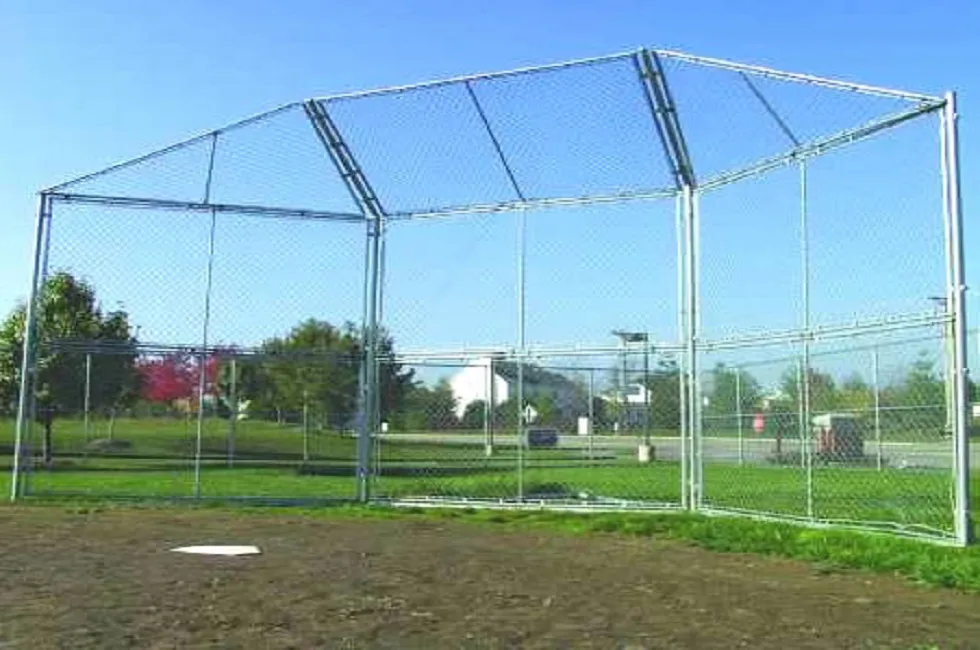
Baseball and softball fields in San Francisco belong mostly to schools, parks and youth leagues, and many of them are squeezed into city blocks with streets, houses and parked cars close behind home plate. That makes the backstop a safety structure as much as a piece of field equipment. We build chain link backstops sized to the field: a simple straight panel for a practice diamond, or a taller design with angled wings and an overhang where foul balls would otherwise leave the property.
A backstop is a tall, heavy fence and is built like one. Posts are larger and set deeper than fence posts, in footings sized for the height and for wind. Ground conditions change across the city: sand on the west side can slump into an open hole, and fields on old fill near the bay may need wider footings. We look at the soil when the first holes are opened and adjust.
Fog and salt air are hard on ball fields, since they are open, irrigated and often near the ocean. Galvanized framework and heavy-gauge galvanized or vinyl-coated fabric are what last. The lower section takes the most abuse from balls and cleats, so it gets heavier fabric or a bottom rail. Player benches, dugout fencing and baseline fences can be built in the same visit so the whole field matches.
Backstops in San Francisco: common questions
Does a backstop need a permit in San Francisco?
A backstop is far taller than the 6 foot fence height that needs no building permit, so plan on one from the Department of Building Inspection. School and park fields have their own owners and approval steps. We provide the drawings and details those reviews ask for.
Can an old backstop be repaired instead of replaced?
Often. If the posts are straight and solid, new fabric, rails and ties make it serviceable again. If posts are rusted through at the ground or leaning, the frame has to be rebuilt. We inspect the base of every post first.
How do you keep foul balls out of the street?
With height, an overhang angled back over the plate, and wing panels along the baselines. On tight city fields, netting above the chain link can add protection. The layout depends on the field and what is behind it.
How it works
- Free estimate: Call, text or book online. We visit, measure and talk through options.
- Written quote: Clear pricing with material choices side by side.
- Permits & planning: We check local rules and help with permits before we dig.
- Install & clean-up: Our crew installs, cleans up and walks the finished fence with you.